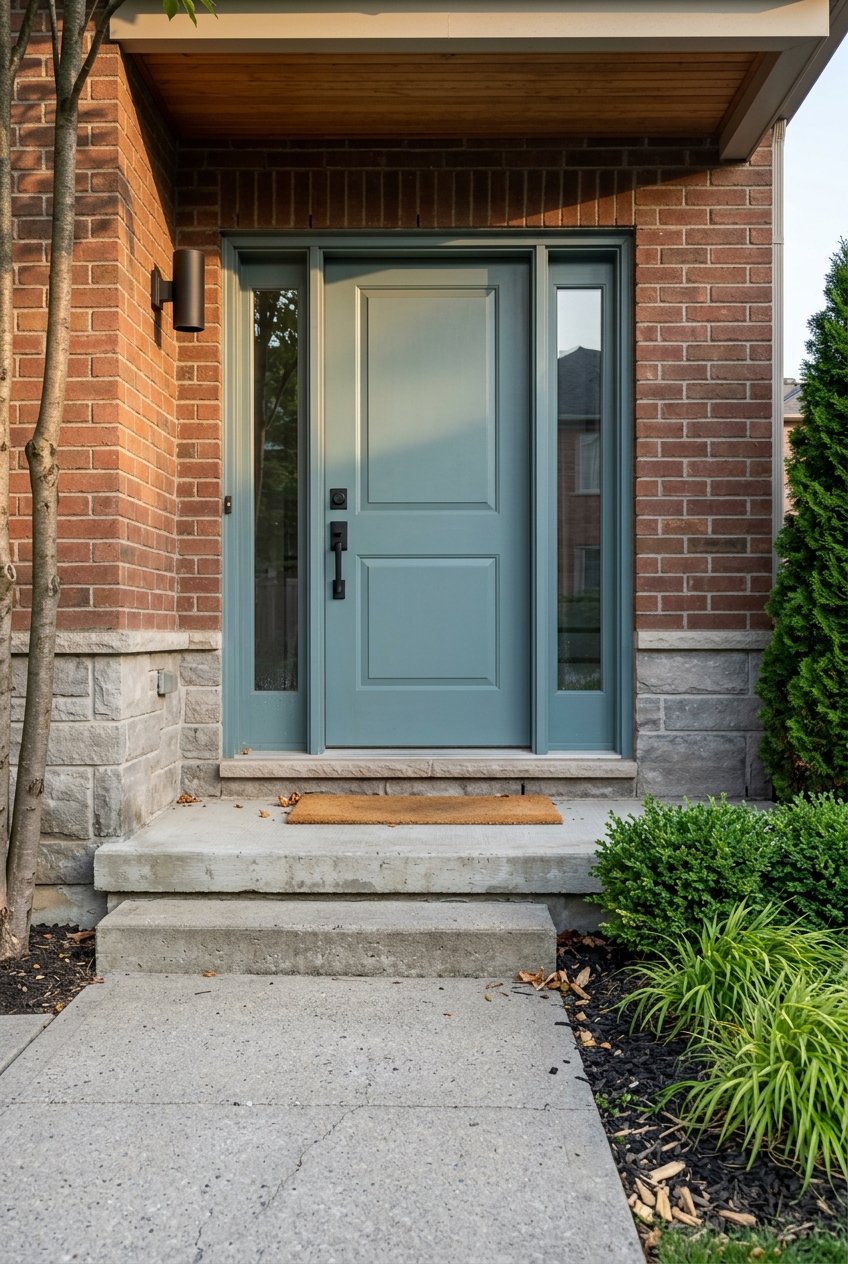
A First-Time Buyer’s Guide to East Toronto on a Budget
Wondering if buying your first home in Toronto’s east end is still possible on a budget? It can be, but only if you treat your budget like a strategy, not a guess. The good news is that today’s market gives buyers more negotiating power than they had in a more competitive cycle, which means careful planning can go a long way. In this guide, you’ll learn how to think about affordability, where to look in the east end, and how to avoid stretching too far. Let’s dive in.
If you are buying your first home, the biggest mistake is focusing only on the purchase price. What matters more is your full monthly carrying cost, including your mortgage, property taxes, heating, condo fees if applicable, and a cushion for repairs and maintenance.
According to the Financial Consumer Agency of Canada, your monthly housing costs should generally stay around 39% of your gross monthly income, and your total debt load should stay around 44%. That makes your budget less about what a lender might approve and more about what will still feel manageable after move-in.
In Toronto’s east end, that monthly view matters a lot. City of Toronto census profiles show average major payments for owner households at $2,254 in Toronto East York and $1,730 in Scarborough. Those figures are broad area averages, but they reinforce an important point: “affordable” is about the full payment, not just the sticker price.
The east end is not one single market. Your options can look very different depending on whether you are searching in Toronto East York or Scarborough.
In Toronto East York, 53.4% of dwellings are apartments in buildings with five or more storeys, while only 11.2% are single-detached homes. That means budget-minded first-time buyers there are often choosing between condos, apartments, and other lower-maintenance options rather than expecting a detached house at an entry-level price point.
Scarborough offers a different mix. City data shows 37.2% of dwellings are single-detached homes, 9.6% are row houses, and 35.2% are apartments in buildings with five or more storeys. Ownership is also higher in Scarborough at 64.0%, compared with 43.8% in Toronto East York.
If your budget is tight, Scarborough may offer more realistic ownership options across different home types. If you want to stay closer to Toronto East York, you may need to be more flexible about size, building type, or renovation level.
That is not bad news. It just means your best first home may be a condo, a townhouse-style unit, or an older property with a little less polish and a little more potential.
A strong first-home budget should include more than your down payment. Before you book showings, map out four key numbers:
The Financial Consumer Agency of Canada says buyers should expect closing costs of about 1.5% to 4% of the purchase price. That may include legal fees, inspections, title insurance, and property tax adjustments. If you spend every dollar on the down payment, you may put yourself in a stressful position before you even get the keys.
Mortgage qualification can also be stricter than buyers expect. For uninsured mortgages, OSFI’s minimum qualifying rate is the greater of your contract rate plus 2% or 5.25%.
In plain language, you may be shopping based on one payment but qualifying based on a higher one. That is why disciplined buyers set a budget before they fall in love with a property.
Your minimum down payment in Canada depends on the purchase price. CMHC says the minimum is 5% on homes priced at $500,000 or less.
For homes between $500,000 and $1.499 million, the minimum is 5% of the first $500,000 plus 10% of the amount above $500,000. Homes priced at $1.5 million or more require at least 20% down and are not eligible for CMHC mortgage loan insurance.
If your down payment is under 20%, mortgage loan insurance is required. CMHC says premiums range from 0.6% to 4.5% of the mortgage amount.
In Toronto’s east end, small jumps in purchase price can have a real impact on cash required and monthly payments. That is one more reason to compare homes based on full ownership cost, not emotion or list price alone.
If you are trying to buy on a budget, every legitimate savings tool matters. Several programs can help reduce your upfront costs or improve your tax position.
The First Home Savings Account lets eligible first-time buyers save tax-free for a qualifying first home. You can contribute up to $8,000 in your first year, with a $40,000 lifetime contribution limit, and contributions are generally tax-deductible.
The Home Buyers’ Plan allows eligible buyers to withdraw up to $60,000 from RRSPs tax-free. For many first-time buyers, this can be an important part of the down payment strategy.
The federal home buyers’ amount is a non-refundable tax credit of up to $10,000 for 2025, reducing federal tax payable by up to $1,500. Eligible spouses, common-law partners, or joint purchasers may split it.
In Ontario, the first-time homebuyer land transfer tax refund is capped at $4,000. In Toronto, the municipal first-time buyer rebate applies to both resale and newly constructed residential properties and is capped at $4,475.
The City of Toronto says the first-time purchaser must occupy the home as a principal residence within nine months of conveyance and must not have previously owned a home anywhere in the world. In a city where land transfer tax is a major closing cost, this can make a meaningful difference.
Budget buyers do not win by chasing the lowest list price. They win by understanding value.
TRREB notes that its MLS Home Price Index is designed to be less volatile than average and median price measures because it controls for home attributes. The practical takeaway for you is simple: compare similar recent sold properties and benchmark trends, rather than assuming the list price tells the whole story.
When you compare homes, look at:
This matters even more in the east end because much of the housing stock is older. City data shows that 58.1% of dwellings in Toronto East York and 59.0% in Scarborough were built in 1980 or earlier.
That does not mean every home needs major work. It does mean you should leave room in your budget for inspections, maintenance, and immediate repairs instead of spending to your absolute maximum on day one.
Buying on a budget in the east end usually means making peace with trade-offs. The goal is not perfection. The goal is getting into the market with a home you can comfortably carry.
You may need to focus on condos, apartment-style homes, or older low-rise options. In these areas, the trade-off is often less space in exchange for a more central location or easier access to the parts of the east end you already know and love.
You may find more ground-related homes, including some townhouses, row houses, and detached homes, depending on your price range. The trade-off may be location, condition, commute patterns, or the amount of updating needed.
An older home may get you into a stronger location or a more spacious layout, but you need to budget for maintenance. A lower purchase price can stop being a deal very quickly if you have no cash left for repairs.
TRREB’s March 2026 Market Watch reported 5,039 GTA home sales, up 1.7% year over year, with 14,442 new listings, down 16.7% year over year. The average selling price was $1,017,796, down 6.7% from March 2025, and the MLS HPI Composite was down 7.4% year over year.
The broader takeaway is that buyers currently have meaningful negotiating power, and TRREB’s 2026 outlook says elevated supply should help keep price growth in check through the year. That does not mean every home is a bargain. It means disciplined buyers can be selective, ask better questions, and avoid rushing.
For a first-time buyer, that is a real advantage. A calmer market gives you more room to compare options, review finances, and make decisions based on facts instead of pressure.
Toronto is also exploring ways to broaden housing options over time. The City has adopted multiplex permissions in Toronto and East York District and Ward 23, and the Beaches-East York Missing Middle Pilot Project at 72 Amroth Avenue was adopted in November 2024.
These changes may support more housing choice in the future, but they should not be treated as a quick affordability fix. If you are buying now, your strategy still needs to be built around current inventory, current monthly costs, and today’s lending rules.
If you want a practical path forward, keep it simple:
Your first home does not need to be your forever home. In many cases, the smartest move is buying a home that gives you stability, manageable payments, and a strong starting point for the next chapter.
If you want help building a realistic first-home strategy in Toronto’s east end, Dimitri Kalkounis can help you cut through the noise, focus on the numbers that matter, and search with a clear plan.
Stay up to date on the latest real estate trends.

At Blue Door Realty Group, we believe every home is more than just a property — it’s the start of your next chapter. Our team is here to guide you with expertise, honesty, and care so you can move forward with confidence.

BLUE DOOR REALTY GROUP
4-50 Northline Rd Toronto ON M4B3E2